
- 0
- 1 443 word
The rapid expansion of digital gaming platforms has introduced unprecedented challenges in compliance management and regulatory oversight. As online gambling operators face increasing scrutiny from regulators across the globe, implementing robust no verification casinos uk has become essential for maintaining operational licenses and safeguarding operators from illicit abuse. This article analyzes the essential features of robust AML systems specifically designed for the distinct challenges inherent in the online gambling industry.
Grasping AML Risks in Online Gambling Platforms
Online gaming sites create unique vulnerabilities that bad actors exploit for illicit fund transfer activities. The transaction velocity, large transaction volumes, and ability to maintain anonymity create ideal conditions for illegal money movement. Operators must acknowledge that their platforms can be used to conceal criminal proceeds through gaming transactions, causing discovery significantly substantially more difficult than traditional banking channels.
The digital landscape of internet gaming facilitates advanced money laundering methods including fund dumping schemes, where gamblers deliberately lose money to transfer funds between accounts. Diverse payment options, digital currency inclusion, and cross-border transactions further hamper oversight capabilities. Regulatory bodies worldwide have recognized online gambling as a high-risk sector, requiring operators to establish strengthened verification procedures and transaction monitoring systems that surpass standard financial institution requirements.
Operators confront significant fines for compliance failures, including loss of licensing, significant fines, and brand damage that can fundamentally damage business viability. Understanding particular risk elements such as unusual betting patterns, fast-moving account activity, and sleeping accounts abruptly returning to use is essential for creating robust prevention measures. The compliance environment continues evolving, with authorities requiring more advanced technological solutions and comprehensive staff training programs to combat emerging threats.
Essential Elements of Anti-Money Laundering Measures in Digital Gaming Platforms
Creating robust AML frameworks requires online gambling operators to establish several integrated levels of protection that work together to detect and prevent money laundering activities. These fundamental components serve as the foundation of regulatory compliance and loss prevention measures throughout digital gaming platforms.
The efficacy of any anti-money laundering program depends on the effective combination of technology, manual review, and explicit procedures that identify the particular weaknesses present in online gambling environments. Each part must be continuously refreshed to adapt to sophisticated fraud techniques and changing regulatory expectations.
Customer Verification and Due Diligence
Identity verification functions as the first key protection against money laundering activities, requiring operators to collect and validate comprehensive customer information before allowing any gambling transactions. This process includes verifying government-issued identification documents, confirming residential addresses, and screening against restrictive lists and politically exposed persons databases.
Modern identity verification solutions implement complex document authentication technologies and biometric identification procedures to confirm the legitimacy of user identities and block account takeovers. Operators are required to maintain thorough documentation of all verification processes and refresh customer data periodically to preserve data accuracy during the customer relationship.
Transaction Monitoring Systems
Automated surveillance systems continuously analyze player transactions in real time to identify patterns and behaviors consistent with money laundering activities such as quick deposits and withdrawals without significant gameplay. These systems employ rule-based systems and AI-powered models to flag suspicious activities that differ from established player profiles and typical gaming behaviors.
Effective transaction monitoring demands fine-tuning alert thresholds to maintain equilibrium between sensitivity with operational efficiency, reducing false alerts while detecting actual suspicious activity. Operators must periodically assess and enhance monitoring parameters based on new patterns, regulatory guidance, and examination of past suspicious activity reports.
Strengthened Compliance Checks for High-Risk Customers
Players who exhibit characteristics connected to elevated money laundering risks require additional scrutiny through enhanced due diligence procedures that exceed standard authentication processes. This includes investigating the source of funds, understanding the purpose of casino play, and performing continuous monitoring of activity trends and user conduct.
Risk indicators at elevated levels include transactions of exceptional size, frequent cross-border transfers, ties to jurisdictions with elevated risk, and behavioral patterns inconsistent with stated income levels or occupation. Enhanced due diligence processes must be documented thoroughly and reviewed by compliance officers to assess if the business relationship should continue or necessitate further safeguards.
Implementing Real-Time Detection and Reporting Systems
Modern digital casino platforms must implement advanced payment tracking systems that analyze player activity trends as they occur. These systems leverage machine learning algorithms to identify anomalies such as unusual betting patterns, frequent fund transfers, or activities misaligned with a player’s known patterns. Real-time alerts enable compliance teams to review suspicious activities right away, preventing potential money laundering before funds leave the platform. Automated screening against international restriction databases and politically exposed persons databases ensures legal adherence across multiple jurisdictions simultaneously.
Effective compliance systems need seamless integration between monitoring tools and compliance submission processes. Operators should establish defined notification protocols that set limits on suspicious activity filings and ensure timely submission to regulatory authorities. Documentation workflows must document detailed payment records, client interactions, and investigation results to assist with compliance reviews. Dedicated compliance staff should examine flagged transactions within established timeframes, typically ranging from 24 to 72 hours depending on risk severity and jurisdictional requirements.
The integration of behavioral analytics strengthens detection accuracy past conventional rule-based approaches. Sophisticated solutions monitor measurements covering session duration, game selection patterns, wager fluctuations, and geographic information to build thorough player profiles. Sudden deviations from standard player behavior initiate prompt review procedures, permitting gaming venues to separate genuine player activity and possible illicit activities. Integration with payment system records provides extra information concerning funding sources and withdrawal destinations, enhancing overall monitoring effectiveness.
Regular system optimization guarantees monitoring systems remain robust against emerging laundering techniques. Periodic validation of detection rules against established patterns verifies system performance and reveals potential gaps in coverage. Operators should conduct quarterly reviews of alert thresholds, modifying settings based on accuracy metrics and new threat signals. Collaboration with industry peers through data-exchange initiatives provides important information on evolving schemes, facilitating proactive system updates that sustain comprehensive protections across the industry environment.
Best Practices for AML Compliance in Digital Gambling
Developing detailed regulatory structures necessitates gaming platforms to integrate various safeguards across all business activities. These systems must address customer verification, transaction monitoring, suspicious activity reporting, and continuous risk assessment to adequately counter money laundering attempts.
Employee Training and Knowledge Programs
Complete workforce development establishes the basis of robust compliance initiatives, ensuring that all staff members grasp their obligations in detecting and preventing financial crimes. Compliance courses should include recognizing suspicious activity, notification requirements, legal obligations, and penalties for violations for both individuals and organizations.
Regular refresher courses and focused programs for high-risk departments reinforce protective systems against evolving money laundering techniques. Customer-facing employees, customer service representatives, and compliance officers need customized training that aligns with their unique functions in tracking customer activity and financial movements.
Consistent Audits and Threat Assessments
Independent audits performed by qualified professionals provide objective evaluations of compliance program effectiveness and uncover possible vulnerabilities before regulators discover them. These assessments should examine procedures, policies, technology systems, and employee competency to guarantee that all elements function cohesively and meet regulatory standards.
Continuous risk assessments allow operators to adjust their compliance strategies to emerging threats, alternative payment solutions, and changing regulatory landscapes across multiple jurisdictions. Comprehensive documentation of these reviews proves to authorities that organizations take active measures to detecting and reducing money laundering risks.
Technology Approaches for Strengthening AML Controls
Sophisticated digital platforms now provide online gambling operators with advanced tools to streamline transaction monitoring and identify suspicious patterns in real time. Machine learning algorithms can process vast amounts of player data, flagging anomalies such as irregular gaming patterns, rapid fund movements, or inconsistent geographical access patterns that may indicate illicit financial transactions. These systems continuously adapt to emerging threats by learning from historical data and regulatory updates, substantially decreasing the manual workload on compliance teams while enhancing detection accuracy.
Blockchain technology and distributed ledger systems provide enhanced transparency and traceability for financial transactions within gambling platforms. By creating immutable records of all deposits, wagers, and withdrawals, these systems enable regulatory specialists to conduct comprehensive audit trails and verify the legitimacy of money across its entire journey. Connection to identity verification technologies further strengthens customer due diligence processes, allowing operators to verify customer identities through fingerprint scanning, credential validation, and database matching against global watchlists and sanctions databases.
Cloud-based compliance management systems deliver flexible infrastructure for operators to keep centralized repositories of customer information, transaction records, and risk assessments. These platforms facilitate seamless collaboration between different departments, enable real-time reporting to regulatory authorities, and ensure consistent application of compliance policies across multiple jurisdictions. Artificial intelligence-powered analytics tools can generate predictive risk scores for individual players, helping operators distribute resources efficiently and focus investigative efforts on the highest-risk accounts while maintaining a seamless experience for legitimate customers.
Auteur/autrice

yaso2368@gmail.com
Publications similaires
How EncompassProductions Converts Creative Vision Into Polished Media Productions
- 0
- 1 048 word
In the current dynamic media environment, converting creative ideas into polished, professional content requires expertise, precision, and the right production partner. EncompassProductions...
Lire la suite
L’ONG ADHA SUR LE DROIT DU TRAVAIL: Assez de textes place à l’effectivité des droits
- 0
- 311 words
A travers un communiqué, l’ONG ADHA constate avec préoccupation que, malgré les réformes engagées, de nombreux travailleurs continuent de faire face à...
Lire la suite
1068 accidents et 41 décès en six mois enregistré à Louga
- 0
- 194 words
Selon Latyr Mané, directeur du développement et de la coopération à l’Agence nationale de sécurité routière (ANASER), la région de Louga a...
Lire la suiteHow Welcome Incentives Are Redefining Today’s Betting Industry Standards
- 0
- 1 417 word
The sports betting landscape has undergone a dramatic transformation over the past several years, propelled primarily through aggressive promotional strategies that have...
Lire la suite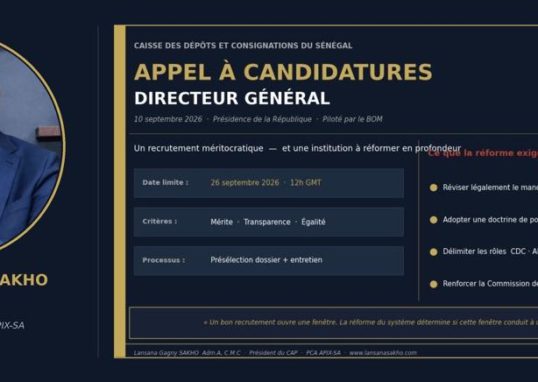
CDC SÉNÉGAL : QUAND LA FILIALISATON REMPLACE LA STRATÉGIE
- 0
- 2 629 words
Une institution publique qui grandit sans doctrine grandit sans direction. Le 10 septembre 2026, le Président de la République Bassirou Diomaye Faye...
Lire la suite
CDC SÉNÉGAL :RÉFORMER, OUI — MAIS À PARTIR DU BON DIAGNOSTIC Une contribution au débat, sans polémique
- 0
- 2 377 words
J’ai lu avec attention les deux contributions de Lansana Gagny Sakho consacrées à la Caisse des Dépôts et Consignations. La première interroge...
Lire la suite